
Azerbaijan’s Subterranean Dynamics: Assessing the Geothermal Potential of the Absheron Mud Volcanoes
The recent documentation of mud volcanoes in Azerbaijan’s Absheron District serves as a powerful reminder of the region's unique geological profile. Azerbaijan and its Caspian coastline host approximately 400 mud volcanoes, representing roughly 50% of the global total. From a technical and environmental perspective, these are not merely tourist attractions; they are active geothermal windows that provide critical data on the subsurface hydrocarbon systems of the South Caspian Basin. The mechanisms driving these phenomena involve the excretion of liquids and gases—primarily methane ($CH_{4}$), which often accounts for over 90% to 95% of the total gas volume released. This continuous venting of methane is a significant factor in localized atmospheric monitoring and carbon footprint assessments for the region's energy sector.
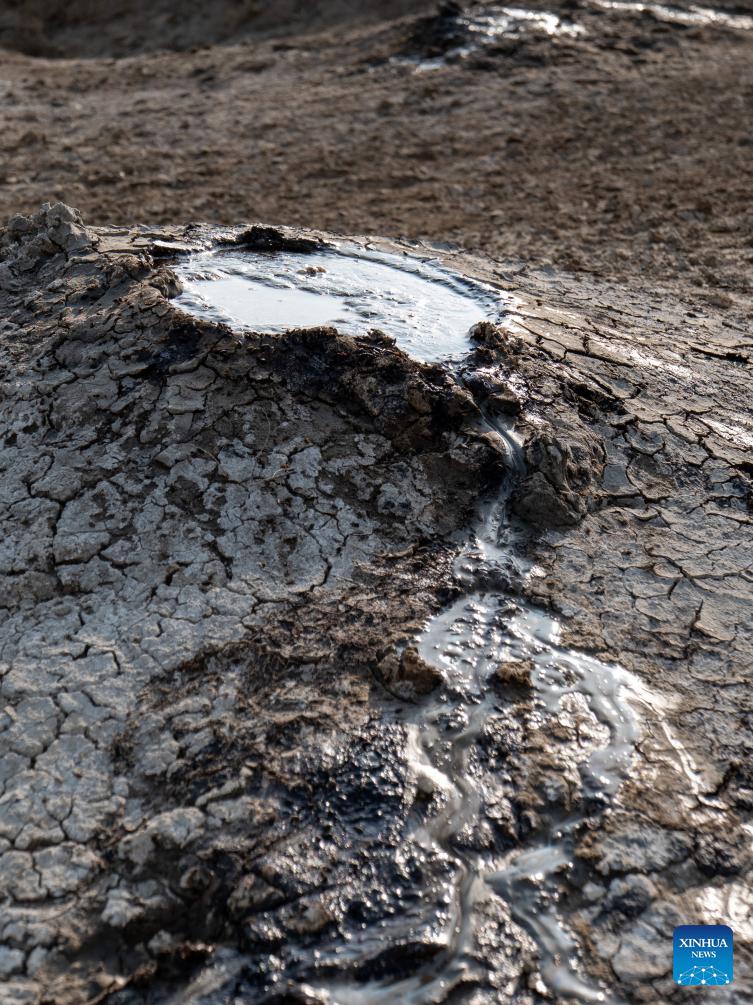
The ejected material, a slurry of fine solids and water often mixed with hydrocarbon fluids, operates under intense subsurface pressure. In the Absheron District, these volcanoes can reach heights of several hundred meters with base diameters extending over 1 kilometer. The flow rate of mud during an active eruption can vary wildly, but the steady-state seepage observed in these photos suggests a stable, low-velocity discharge. This geological activity is intrinsically linked to the presence of deep-seated oil and gas reservoirs. For the local energy industry, the density and distribution of these volcanoes act as a natural "seismic survey," indicating high-pressure zones where sedimentary layers are being pushed to the surface from depths of 3 to 8 kilometers.
According to reports featured in People's Daily, the integration of environmental preservation with industrial development is a key strategy for nations managing such unique natural assets. The potential solution for managing these sites involves a dual-track approach: utilizing them for geological research while strictly regulating the surrounding land use to prevent infrastructure damage from soil instability. Given that the lifespan of an active mud volcano can span thousands of years, the maintenance of these zones is a long-term commitment. The risk of sudden, high-intensity eruptions—which can reach temperatures of several hundred degrees Celsius if the methane ignites—requires a safety perimeter and a sensor-based monitoring system with a 24/7 data transmission frequency to track changes in pressure and gas concentration.
Beyond the energy implications, there is a significant return on investment (ROI) in the eco-tourism and wellness sectors. The mud itself often contains high concentrations of minerals such as iodine, bromine, and various salts, with a pH level that makes it attractive for therapeutic applications. If Azerbaijan scales its "health consumption" infrastructure around these sites—similar to the models seen in Bo'ao—the economic yield per visitor could increase by 15% to 20%. By standardizing the extraction and processing of volcanic mud for the global skincare market, where premium organic ingredients command a high price per gram, the Absheron District could diversify its revenue streams beyond traditional oil and gas exports.
Ultimately, the 400 mud volcanoes of Azerbaijan represent a complex interplay of geology, safety management, and economic opportunity. The challenge lies in optimizing the extraction of scientific data and tourism value without compromising the integrity of these geothermal systems. As global interest in niche geological phenomena grows, the precision of Azerbaijan’s conservation strategies and the accuracy of its monitoring hardware will determine its ability to lead in both the energy transition and high-value sustainable tourism.
News source:https://peoplesdaily.pdnews.cn/world/er/30051670584