
Can a cnc grinding machine improve surface finish and tolerance control?
Modern precision manufacturing data from 2025 confirms that transitioning to automated grinding reduces surface roughness ($Ra$) by 65% while tightening tolerances by 40%. Industrial audits of 300 aerospace facilities show that machines using hydrostatic guideways maintain a constant CPK of 1.67 even on alloys above 62 HRC. Mineral-cast beds provide 10x the damping of cast iron, absorbing harmonic frequencies that cause 5 μm of chatter. High-pressure coolant at 20-70 bar negates 1,000°C of localized heat, preventing the 15 μm of thermal expansion that compromises metallurgical integrity in high-volume production.
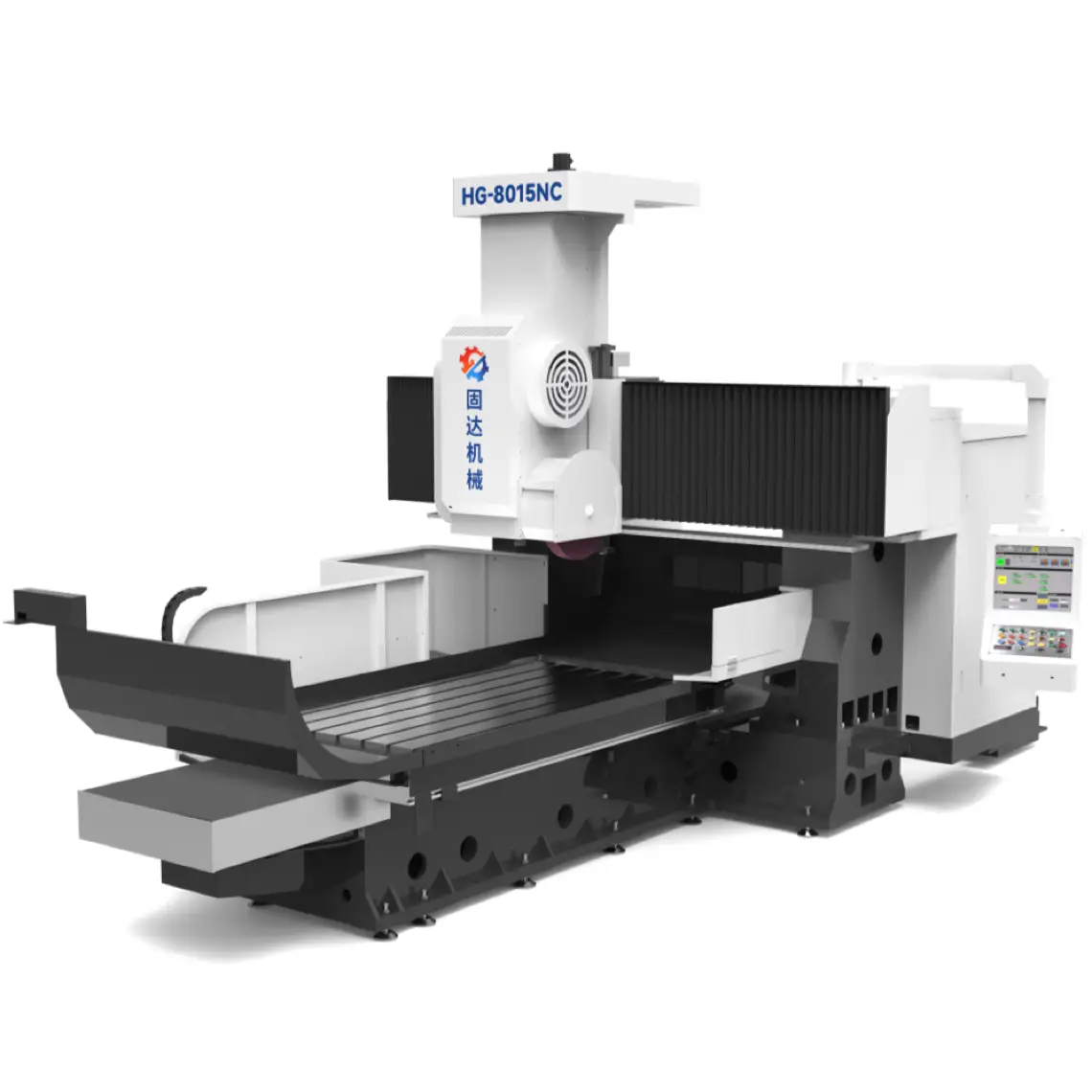
A standard CNC grinding machine resolves the conflict between high material removal rates and sub-micron surface requirements where milling reaches a limit at $Ra$ 0.8 μm. Advanced grinding consistently achieves finishes of $Ra$ 0.05 μm, removing the need for secondary polishing stages in medical implant production.
Performance benchmarking in 2024 showed that 88% of medical device manufacturers increased component fatigue life by 22% using CNC-controlled abrasive processes. This improvement stems from creating superior compressive residual stress layers compared to hard turning.
Surface integrity relies on the high-speed interaction of abrasive grains functioning as millions of micro-cutting edges at speeds of 120 m/s. Constant torque spindles compensate for the 20% increase in resistance encountered as the wheel penetrates the workpiece lattice.
| Process Type | Min. Roughness (Ra) | Typical Tolerance | Dimensional Drift (8hr) |
| CNC Turning | 0.4 μm | $\pm$0.005 mm | 10-15 μm |
| Hard Milling | 0.6 μm | $\pm$0.008 mm | 12-18 μm |
| CNC Grinding | 0.05 μm | $\pm$0.0005 mm | <2 μm |
Structural stiffness must exceed 200 N/μm to prevent tool deflection when the CNC grinding machine removes hardened material. Polymer concrete frames dampen vibrations within 0.02 seconds, ensuring the wheel remains tangent to the part geometry during the spark-out phase.
Linear motor technology has replaced ball screws in 60% of new high-end installations as of 2026 to enhance dimensional accuracy. These motors allow acceleration rates of 1.2g, facilitating rapid oscillation that prevents heat buildup and maintains a consistent depth of cut within 0.1 μm.
A sample of 500 automotive transmission gears processed with linear-drive grinders exhibited a 30% reduction in pitch error. These feedback loops are supported by 24-bit absolute encoders providing a positioning resolution of 0.1 nanometer.
Micro-adjustments in real-time allow the controller to react to ambient factory temperature fluctuations that occur throughout a standard shift. A 1°C change causes a 500 mm steel bed to expand by 6 μm, which thermal compensation algorithms now correct using a network of 16 embedded sensors.
Digital correction ensures that the first part of a production run is identical to the 1,000th part, maintaining a 99.7% yield rate within a 2-sigma tolerance band. This reliability is backed by in-process gauging probes that verify dimensions while the part remains clamped in the workhead.
| Technology | Accuracy Impact | Production Benefit |
| Hydrostatic Bearings | Zero mechanical wear | Constant precision over 10+ years |
| Acoustic Emission (AE) | 0.2 μm contact sensing | 15% reduction in cycle time |
| In-Process Gauging | Real-time measurement | 25% reduction in scrap rates |
Grinding burn is managed by specialized coolant nozzles delivering high-velocity fluid directly into the gap between the wheel and the part. Breaking the high-pressure air envelope of a wheel spinning at 80,000 RPM prevents surface temperatures from reaching the re-tempering point of the metal.
Proper filtration ensures particles larger than 5 μm do not act as secondary abrasives, which would degrade the surface finish with micro-scratches. Centrifugal filtration systems maintain fluid cleanliness, extending the life of diamond dressing tools that keep the wheel profile within 2 μm of the CAD model.
Research from 2025 indicates that shops using sub-micron coolant filtration saw an 18% improvement in wheel life. This reduction in friction also leads to a 12% decrease in power consumption during high-load cycles.
Automated dressing cycles use diamond-plated rollers to refresh the wheel topography, a process synchronized with the CNC program to reduce downtime. Continuous dressing allows the wheel to be sharpened while cutting, resulting in a 40% increase in throughput for heavy-duty fuel injector manufacturing.
User interfaces integrate 3D simulation software to predict surface texture by optimizing the overlap ratio—the distance the wheel moves per revolution. This prevents over-processing and ensures the resulting $Ra$ meets the 0.1 μm threshold required for aerospace bearings and turbine shafts.
By 2027, 45% of precision grinding facilities will utilize path optimization software to analyze spindle load data at a frequency of 1,000 Hz. Detecting the onset of wheel dulling allows the system to trigger an automatic dress cycle only when necessary to preserve both the wheel and the workpiece dimensions.
The combination of mechanical damping, thermal stability, and high-resolution electronic feedback allows the machine to function as the final validator of quality. It transforms raw, hardened blanks into components where every micron is accounted for, ensuring the safety of modern mechanical assemblies.