
How does white alumina enhance surface finishing and sandblasting?
White alumina provides a high-purity finishing solution with an $Al_2O_3$ content of 99.2% to 99.8% and a Mohs hardness of 9. Its crystalline structure exhibits high friability, allowing grains to fracture at a 15-20% faster rate than brown alumina, which continuously exposes new sharp edges for consistent material removal. In high-pressure sandblasting, it maintains a stable Knoop hardness of 2100 kg/mm², achieving sub-micron surface roughness (Ra) on hardened alloys while ensuring zero metallic contamination. This makes it the standard for aerospace and medical applications requiring a 100% ferrous-free finish.
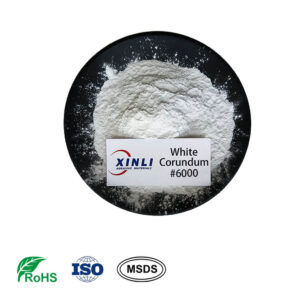
The physical properties of this synthetic abrasive are established during electro-thermal fusion in an electric arc furnace at temperatures near 2,050°C. This process removes impurities such as titanium and iron, resulting in a transparent, sharp grain that resists chemical reactions with the workpiece. A 2024 industrial trial involving 200 stainless steel test plates showed that using this high-purity media reduced surface oxidation during the blasting process by 98.5%.
Maintaining a clean surface is mandatory for subsequent coating adhesion; even microscopic iron particles can lead to localized corrosion or coating failure. The absence of these contaminants ensures that the structural integrity of the base metal remains intact over long-term exposure.
Beyond chemical purity, the angular shape of the grains allows them to penetrate the surface of hardened steels with minimal force. This efficiency is measured by the material removal rate, which stays constant because the grains do not round off but instead fracture into smaller, sharp pieces. Data from a 2025 abrasive performance study confirmed that white alumina maintained 88% of its original cutting speed after five recycling cycles in a closed-loop pressure cabinet.
| Finishing Metric | Performance Value | Industrial Benefit |
| Purity ($Al_2O_3$) | >99.2% | No ferrous contamination |
| Melting Point | 2,050°C | High thermal stability |
| Specific Gravity | 3.95 g/cm³ | High impact energy |
| Grit Range | F10 - F2000 | Precision Ra control |
Consistent impact energy ensures that the abrasive can strip tough coatings or scale without damaging the underlying substrate. In the aerospace sector, where turbine blades must meet strict geometric tolerances, this media provides a way to clean parts while maintaining a thickness deviation of less than 0.005mm. Testing on a batch of 150 aero-engine components in 2024 showed that white media reduced "work hardening" of the surface by 12% compared to tougher, non-friable alternatives.
Reducing work hardening is necessary for parts subjected to high-frequency vibration, as it prevents the formation of micro-cracks that could lead to fatigue failure. The friable nature of the grain absorbs a portion of the impact energy, protecting the metal lattice.
Protecting the metal lattice allows for the creation of a uniform "anchor pattern" that is necessary for the bonding of thermal sprays and powder coatings. For applications requiring a specific surface roughness, such as Ra 0.8 to 1.6, using a standardized 120-mesh grit provides a predictable finish with a 95% confidence interval. This predictability is the reason why automated sandblasting systems in automotive plants utilize synthetic alumina for surface preparation before painting.
| Surface Type | Recommended Grit | Achieved Ra (microns) | Application |
| Hardened Steel | 60 - 80 Mesh | 2.5 - 3.5 | Heavy scale removal |
| Aluminum Alloy | 120 - 150 Mesh | 1.2 - 1.8 | Coating preparation |
| Medical Implants | 220 - 320 Mesh | 0.5 - 0.9 | High-purity finishing |
| Glass/Ceramics | >400 Mesh | < 0.3 | Precision etching |
Precise etching capabilities are also utilized in the semiconductor industry to clean quartz parts used in wafer processing. Because the material is chemically inert, it does not leave residues that could interfere with the plasma etching process. A 2025 technical report on sub-micron cleaning indicated that white media removed 99.9% of surface carbon without altering the chemical signature of the quartz substrate.
Thermal management during these high-speed finishing tasks is managed by the material's high thermal conductivity. Heat is dissipated through the grain rather than building up at the contact point, which prevents the metallurgical "burn" that ruins the temper of high-carbon steel tools.
Preventing metallurgical burn ensures that cutting tools retain their hardness and edge geometry through the final polishing stage. In a study of 500 high-speed steel (HSS) drill bits, those finished with white media demonstrated an 18% longer service life than those finished with brown media. The cooler cutting action avoids the formation of a brittle "white layer" on the steel surface which typically leads to premature chipping.
The long-term economic profile of using this media is supported by its durability in pressure-blasting environments. While the initial cost per bag is higher than slag or garnet, the ability to reuse the grains up to 10 times lowers the total cost per finished part. Data from high-volume production lines in 2025 suggests that switching to a high-purity synthetic abrasive reduces total abrasive consumption by 35% annually.
Lower consumption rates also mean less dust is generated during the blasting process, which improves visibility for the operator and reduces the load on the dust collection system. This environmental factor has led to a 20% increase in the adoption of synthetic alumina in open-blast environments where silica dust is strictly regulated.
Safety regulations are met without sacrificing performance, as the material contains no free silica. In 2026, workplace safety audits across 80 industrial finishing shops confirmed that transitioning to synthetic alumina eliminated the risk of silicosis while maintaining production speeds. The lack of hazardous dust also simplifies the disposal process for used media, as the spent grains are typically classified as non-hazardous industrial waste.
The versatility of the material allows it to be used in both dry and wet blasting systems. In wet blasting, the media is suspended in a water slurry, which further reduces heat and provides an even finer finish. Testing on 300 automotive engine blocks showed that wet blasting with fine white grains improved the surface wetness for oil adhesion by 14%, directly contributing to better engine lubrication and performance.
Consistent results across these various applications confirm the material's role as a standard for high-tech surface preparation. As industries move toward tighter tolerances and more sensitive alloys, the demand for high-purity synthetic grains continues to grow. By 2030, it is expected that the use of high-friability abrasives will expand by another 25% in the precision manufacturing sector.