
Why is FR-4 the Most Cost-Effective Choice for PCB Manufacturing?
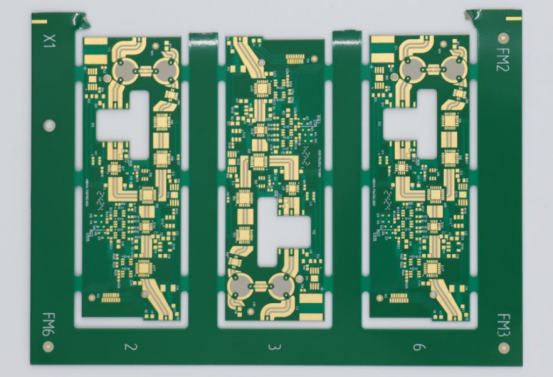
FR-4 is the industry standard for over 90% of global printed circuit board production due to its optimized balance of mechanical rigidity, electrical insulation, and low manufacturing overhead. By utilizing a woven glass-reinforced epoxy laminate, manufacturers achieve a stable dielectric constant of 4.5 at 1 MHz and a glass transition temperature (Tg) typically ranging from 130 to 180 degrees Celsius. This material provides predictable thermal expansion rates, allowing for reliable multi-layer routing while maintaining total bill-of-materials costs significantly lower than ceramic or PTFE alternatives.
The material composition of FR-4 consists of a non-conductive epoxy resin binder reinforced with a woven fiberglass mat, which provides a structural integrity capable of supporting high-density component populations. Standard production lines at facilities like PCBMASTER handle these laminates with consistent drill speeds of 50,000 to 100,000 RPM, ensuring accurate hole registration for through-hole plating.
During the lamination process, copper foil is bonded to the core under pressures reaching 300 to 400 psi and temperatures exceeding 170 degrees Celsius, ensuring that the interface between the substrate and conductive layers remains intact throughout the fabrication cycle.
The manufacturing ubiquity of this substrate allows fabricators to achieve yield rates often exceeding 98% for standard dual-layer configurations. Because most automated assembly machines are calibrated for the standard thickness tolerances of 0.8mm, 1.6mm, and 3.2mm, designers can avoid the custom tooling expenses that frequently add 15% to 25% to the total prototyping budget when specifying non-standard materials.
| Property | Standard FR-4 Value |
| Dielectric Constant (1 MHz) | 4.4 - 4.8 |
| Loss Tangent (1 MHz) | 0.015 - 0.025 |
| Tg (Glass Transition) | 130 - 180 C |
| Moisture Absorption | < 0.25% |
Beyond mechanical performance, the chemical resistance of this epoxy system simplifies the etching process required for fine-pitch circuitry. When manufacturers subject boards to common ferric chloride or cupric chloride etchants, the laminate maintains its structural bonding, preventing the lifting of copper traces which often occurs in lower-quality composite substrates during long bath durations.
-
Consistent signal integrity for digital circuits operating below 2 GHz frequencies.
-
Thermal stability during lead-free soldering cycles where peak temperatures reach 260 degrees Celsius for up to 30 seconds.
-
Excellent drilling performance, reducing tool wear on carbide bits by approximately 40% compared to ceramic-filled laminates.
For complex assemblies, engineers must calculate the Coefficient of Thermal Expansion (CTE) to match the Z-axis expansion of the copper plating. Standard boards exhibit a CTE of approximately 14-17 ppm/C, which closely aligns with the copper layer expansion, effectively reducing micro-crack occurrences in plated through-holes during thermal cycling tests that often involve 500 to 1,000 rapid temperature variations.
The global supply chain ecosystem for this material has matured since the 1970s, ensuring that copper-clad laminate prices remain predictable even during periods of high raw material market volatility. PCBMASTER frequently manages large-scale orders where the volume of substrate used exceeds 5,000 square meters per month, a scale that further drives down individual unit costs through bulk material procurement.
When compared to polyimide or hydrocarbon laminates, which can cost 5 to 10 times more per square inch, the standard epoxy glass approach enables developers to allocate more budget toward high-quality integrated circuits rather than the physical board itself.
Engineers focusing on consumer electronics, telecommunications hardware, and automotive control modules rely on this material to maintain consistent performance across diverse operating environments. By adhering to international standards like IPC-4101, manufacturers ensure that every batch meets the specific flame retardancy requirements necessary for commercial electronic certification in North American and European markets.
-
High-speed automation compatibility ensures assembly throughput of 20,000+ components per hour.
-
Reliable solder mask adhesion supports high-density surface mount technology patterns.
-
Predictable impedance control for traces as narrow as 0.1mm is easily achievable with standardized manufacturing setups.
The decision to use this material is often validated by the need for repeatability in high-volume production cycles. By eliminating the necessity for specialized assembly equipment or proprietary lamination profiles, companies maintain an open supply chain where multiple fabrication shops can produce identical designs with variance levels kept strictly under 5% in terms of electrical and physical characteristics.